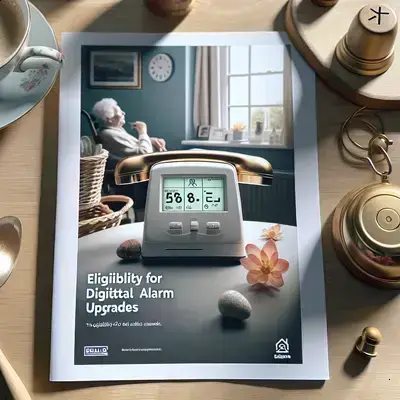
Ever wondered if your personal alarm will still work after 2026? The check personal alarm digital switchover UK is crucial as traditional phone lines shift to digital. For many, especially the elderly, this raises real worries about safety and reliability.
If your alarm depends on a landline, you might face unexpected disruptions. But don’t panic—there are straightforward ways to test if your device is ready for the change. Simple checks can save you a lot of trouble later on.
Stick around, and I’ll walk you through key steps to verify compatibility, talk to providers, and ensure peace of mind. Your safety shouldn’t wait until 2026 hits—start confirming today.
Understanding the digital switchover and its impact on personal alarms
The digital switchover in the UK is the process where traditional analogue telephone lines are being replaced by modern digital networks, which is set to complete by the end of 2025. This change affects devices relying on landline connections, including many personal alarms used for telecare and emergency support.
Personal alarms designed before this transition often use analogue phone lines to communicate alerts. Once the switch to digital networks is complete, these alarms may no longer function as intended, putting users at risk of losing a vital safety connection.
How The Digital Switchover Affects Personal Alarms
The main impact of the digital switchover is that analogue signals will cease, meaning alarms that are not digitally compatible will fail to send alerts. This affects emergency call centres, carers, and ultimately the safety of individuals relying on these devices.
Many telecare providers and alarm manufacturers are already preparing for this shift by offering digital-ready alarms or upgrade pathways. The UK government and organisations like the Digital Telephone Service (DTS) emphasise the importance of readiness to avoid service interruptions.
Understanding whether your personal alarm is compatible with digital phone lines is vital. Alarms using the older PSTN (Public Switched Telephone Network) will generally need upgrading or replacement, while newer devices supporting VoIP (Voice over Internet Protocol) or mobile connectivity are typically unaffected.
Key Terms To Know
- PSTN (Public Switched Telephone Network): Traditional analogue phone lines used by many current personal alarms.
- VoIP (Voice over Internet Protocol): Technology that delivers voice communications over the internet, widely supported by modern alarms.
- Telecare Services Association (TSA): The UK body representing telecare providers, offering guidance on the switchover impact.
- Digital Telephone Service (DTS): The national effort to replace analogue telephone infrastructure with digital systems across the UK.
Being informed about these definitions helps in conversations with your alarm provider or care service to ensure your safety equipment remains functional after the switchover.
How to perform simple tests to check alarm compatibility
To ensure your personal alarm will work after the digital switchover, it’s important to perform simple compatibility tests. These tests help verify if your alarm can communicate effectively over the new digital phone services.
Step-by-step guide to test your personal alarm compatibility
- Check your alarm model: Identify the make and model of your personal alarm and note whether it uses an analogue line or digital connectivity.
- Review your phone line type: Confirm if your home uses traditional analogue phone lines or a digital service such as VoIP.
- Conduct a line test: Disconnect your alarm from its phone line and plug in a standard analogue phone. Check if you get a dial tone and can make calls. No dial tone suggests the line may already be digital or disconnected.
- Perform an alarm test call: Using your personal alarm’s test function, initiate a test alert to your monitoring centre. Follow your alarm provider’s guidelines carefully to avoid false alarms.
- Contact your alarm provider: Share your test results and request confirmation on whether your alarm is compatible with the digital switchover and if any upgrades are needed.
These checks help catch potential problems early. Often, personal alarms relying on the PSTN network will need replacement or an upgrade to digital or mobile-compatible devices.
Many providers recommend upgrading to alarms that support cellular networks or fibre broadband, as these tend to be more reliable and future-proof. Testing your equipment regularly can prevent surprises after the switchover deadline.
Steps to contact providers and confirm telecare readiness
Contacting your personal alarm provider to confirm telecare readiness for the digital switchover is an essential step to ensure your safety is not compromised after 2026. Providers will inform you if your current device is compatible or if an upgrade is necessary.
How to effectively communicate with your alarm provider
Before reaching out, gather all relevant information about your personal alarm system, including the make, model, purchase date, and any paperwork or manuals. This information will help your provider give you accurate advice.
- Locate provider contact details: Find the official customer service phone number or email address for your alarm provider, which can be found on your device documentation or billing statement.
- Prepare your questions: Write down specific questions about digital switchover compatibility, necessary upgrades, and how the provider supports the transition.
- Make the call or send an email: Contact the provider and provide your device details. Ask whether your alarm has been tested for the digital network and if any actions are required.
- Request a telecare readiness check: Some providers offer comprehensive telecare readiness checks, including testing equipment and network compatibility.
- Arrange for an upgrade if needed: If your device is not compatible, discuss upgrade options such as digital alarms or mobile-network-enabled devices, including costs and installation timing.
Additional tips to ensure smooth communication
- Keep a record of your conversations, including names, dates, and advice given.
- Ask about support services such as technical help lines and onsite visits.
- Verify response times for any follow-up actions or installation appointments.
- Check if alternative equipment can be loaned or provided during any transition period.
Telecare services association (TSA) and government agencies recommend contacting your alarm provider well in advance of the switchover deadline to prevent service disruption.
Options if your alarm won’t work after the digital switchover
If you discover that your personal alarm won’t function after the digital switchover, there are several reliable options available to maintain your safety and peace of mind. Upgrading or replacing your alarm system is essential to ensure continuous protection.
Upgrade to a digital-compatible personal alarm
Many manufacturers now offer alarms designed to work with digital phone lines or mobile networks. Upgrading to one of these ensures compatibility with the UK’s new telecommunication infrastructure.
Switch to mobile network alarms
Alarms using cellular networks offer greater flexibility and often don’t rely on fixed telephone lines. These devices operate over 3G, 4G, or 5G, providing reliable connections even during power cuts or internet outages.
Examples of established providers include:
- Telecare Alarm System by Tunstall Healthcare: Known for secure mobile-enabled alarms with multiple features.
- Choice Connect Mobile Alarm offered by TeleAlarm UK supports SIM cards and remote monitoring.
Use broadband-based alarm systems
Alarms connected via fibre broadband or VoIP (Voice over Internet Protocol) can be another alternative. These systems transmit signals over the internet and often include additional safety features.
Consider comprehensive telecare packages
Some suppliers provide full telecare services, combining alarms with sensors and 24/7 monitoring. These packages are usually available through local councils or healthcare providers.
Comparison of alarm types
| Alarm Type | Connectivity | Advantages | Considerations |
|---|---|---|---|
| Analogue (PSTN) | Traditional landline | Widely used, simple setup | Not supported post-2026 digital switchover |
| Digital (VoIP) | Broadband internet | Cost-effective, feature-rich | Dependent on internet stability |
| Mobile Network | 3G/4G/5G SIM card | Reliable, portable, no landline needed | May involve monthly SIM costs |
Working with your alarm provider or local telecare services association helps identify the right alternative for your needs. Early planning and upgrading your system before the switchover deadline can prevent safety risks and service interruptions.
FAQ – How To Check If Your Personal Alarm Will Work After 2026
What is the digital switchover and why does it affect my personal alarm?
The digital switchover is the replacement of traditional analogue phone lines with digital networks in the UK, which can cause alarms relying on analogue lines to stop working.
How can I test if my personal alarm is compatible with the new digital system?
You can perform simple tests like checking for a dial tone on your line, using your alarm’s test function, and contacting your provider to confirm compatibility.
What should I do if my personal alarm will not work after the switchover?
You should consider upgrading to a digital-compatible alarm, switching to a mobile network alarm, or exploring broadband-based alarm systems.
Who should I contact to confirm if my alarm is ready for the digital switchover?
You should contact your personal alarm provider or your local telecare service to request a telecare readiness check and advice on upgrades if needed.
Are there any providers that offer mobile network personal alarms?
Yes, providers like Tunstall Healthcare and TeleAlarm UK offer personal alarms that work over cellular networks such as 3G, 4G, or 5G.
What are the advantages of mobile network alarms over traditional analogue alarms?
Mobile network alarms provide greater reliability, do not depend on fixed lines, and often continue working during power cuts or internet outages.